


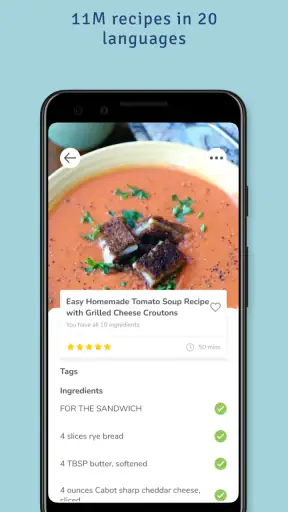
I like cooking apps most when they solve a real problem rather than simply giving me another endless stream of attractive food photos. SuperCook - Recipe Generator takes a more practical route: I tell it what I already have, and it helps me think about what those ingredients can become. That small change in approach makes it especially useful on the evenings when I have a few vegetables, a can in the cupboard, and no desire to plan a supermarket trip.
Developed by SuperCook, this free Food & Drink app is aimed at everyday home cooking, not professional chefs. It is available for Everyone and supports Android devices running version 7.0 or later. The current version is 2.0.29.1, and its 4.6 average from roughly 19 thousand ratings suggests that the basic idea connects with a lot of people. After using it as a practical kitchen tool rather than a novelty, I found that its lasting value depends on one habit: keeping the ingredient list reasonably close to reality.
Why the first week feels so useful
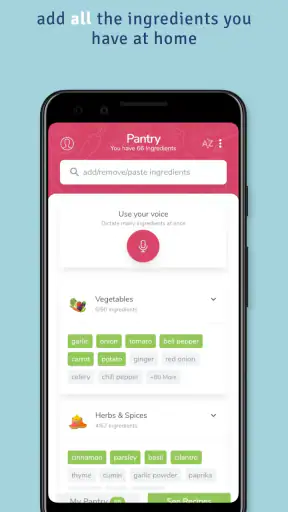
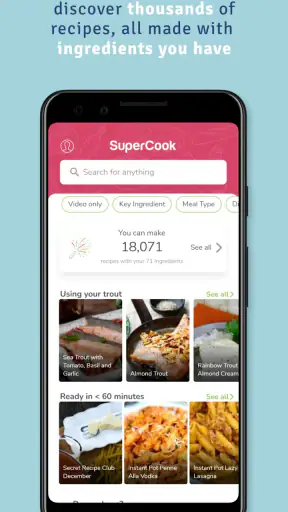
The first time I used SuperCook, the appeal was immediate because it changed the question from “What do I want to eat?” to “What can I make with what is here?” That is a much easier question when I am tired, short on time, or trying not to waste food. Instead of starting with a recipe and discovering that I need several missing items, I can begin with the contents of my kitchen and narrow the possibilities from there.
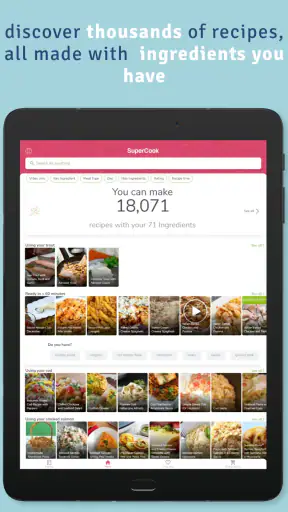
This makes the app particularly helpful after a grocery shop. I can add the ingredients I bought deliberately, then see combinations I might not have considered. It is also useful after a busy week, when leftovers and half-used ingredients have accumulated. A recipe search engine usually rewards a precise dish name; this app is more forgiving when I only know that I have rice, eggs, tomatoes, or a few vegetables.
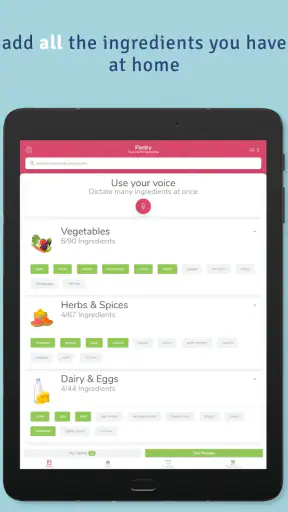
The experience is strongest when I treat the ingredient list as a working pantry rather than a permanent inventory. I do not need to enter every spice or minor condiment before getting value from it. Starting with the main ingredients gives me a quick sense of direction, while adding more items helps narrow the results. That two-stage approach is faster than attempting to catalogue the entire kitchen in one sitting.
A realistic example is a weekday evening with cooked rice, an onion, frozen vegetables, and eggs. A conventional recipe app may lead me through several searches before I find something that fits. Here, I can build the search around those ingredients and use the results as a shortlist. I still decide whether the dish suits my time, equipment, and appetite, but the app removes much of the blank-page feeling that often leads to ordering takeaway.
The best first-week habit is to enter what you genuinely have, not what you hope to buy. If I add an aspirational shopping list, the results become less useful for the immediate “use up what is here” problem. When I keep the list honest, the suggestions feel more relevant and the app becomes a practical decision aid rather than another place to save recipes I will never cook.
It is more useful as a filter than as a personal chef
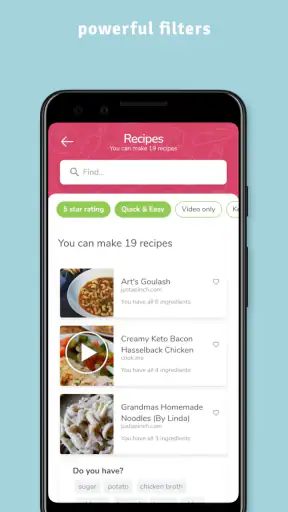
SuperCook does not remove the need for judgement. Ingredient-based matching can suggest a workable direction, but I still need to check quantities, substitutions, preparation time, and whether the result fits my cooking ability. I see that as a strength rather than a flaw, provided I use it correctly. The app helps me discover and filter possibilities; it does not know exactly how hungry I am or whether I have thirty minutes available.
That distinction matters for beginners. Someone who wants step-by-step teaching, knife guidance, or a structured cooking course may prefer a more instructional app. SuperCook is better for the person who can follow a recipe once they have found one that fits. Its value is in connecting available ingredients with recipe ideas, not in replacing basic kitchen judgement.
What keeps it useful from month to month
The novelty fades after the first few searches, as it should. The important question is whether the app remains useful once I have seen its basic idea. In my experience, it can, because the problem it addresses repeats every week: food needs using, plans change, and the contents of a refrigerator rarely line up perfectly with a recipe.
Its recurring value comes from changing the ingredient mix. One week I may be trying to use vegetables before they deteriorate; another week I may have pantry staples but very little fresh food. The app can serve both situations because the starting point is not a fixed meal plan. That flexibility gives it a better chance of staying relevant than a recipe collection built around a single cuisine or cooking style.
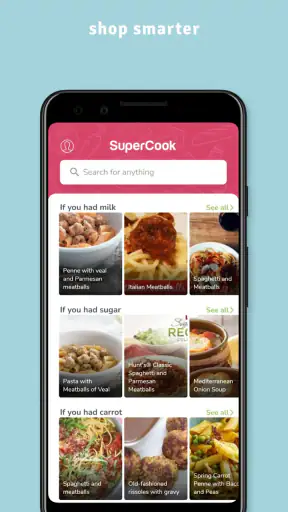
I also find it useful for reducing unnecessary shopping. Before buying an ingredient for a recipe, I can check whether the items already at home lead to an acceptable alternative. This does not mean every suggestion will be better than the meal I originally imagined, but it encourages a more economical decision. The trade-off is that I sometimes need to accept a less specific meal instead of chasing an exact dish.
Another good monthly workflow is to use the app at two different moments: once before shopping and again after shopping. Before shopping, I can identify recipes that use ingredients already available and buy only the missing essentials. After shopping, I can add the new items and look for ways to combine them with older ones. This turns the app into a lightweight planning loop instead of a one-time recipe search.
It is also well suited to households where different people cook. One person can add ingredients, while another can browse the resulting ideas and choose something manageable. That shared process is less rigid than assigning meals in advance. However, it works best when everyone agrees on what counts as available. A forgotten ingredient or an item that someone was saving can make the suggested recipes less practical.
With more than a million installs, SuperCook has clearly reached beyond a small group of experimental users. I would not treat that figure as proof that every cook will enjoy it, but it does fit my impression that the concept has broad everyday appeal. People who already know exactly what they will cook may rarely need it; people who repeatedly face the “what can I make?” problem are more likely to return.
The maintenance burden is small, but real
The main upkeep is ingredient management. That sounds simple, yet it determines the quality of the experience. If I leave an item listed after using it, recipes may look suitable when they are not. If I fail to add a basic ingredient I actually have, I may overlook useful results. The app is only as current as the pantry information I give it.
I would not recommend trying to record every tiny quantity. That creates more work than the app saves. I get better results by tracking meaningful ingredients and treating quantities as something to verify when I choose a recipe. For example, knowing that I have pasta, canned tomatoes, and cheese is valuable; recording every remaining spoonful of seasoning is not necessary for the initial search.
This maintenance is easier when I update the list at natural moments: after shopping, while unpacking groceries, or immediately after cooking something that used a key ingredient. Waiting until the end of the week creates a larger correction session and makes the app feel like a chore. A quick update attached to an existing routine is much more sustainable.
The app is free, which lowers the cost of trying this workflow. That matters because ingredient-based planning is not equally useful for everyone. I can experiment without committing money, then decide whether it deserves a regular place in my routine. Its age rating of Everyone also makes it suitable as a household cooking aid, although younger users will still need ordinary supervision in the kitchen.
There is a subtle trade-off between accurate inventory and spontaneous discovery. The more carefully I maintain the list, the more targeted the results become. But if I enter only a handful of ingredients, I may see broader and sometimes more surprising possibilities. I prefer starting broad and refining only when the results are too numerous or unsuitable. That keeps the process quick and prevents maintenance from taking over.
Where fatigue begins
The biggest source of fatigue is repetition. If I use the same staple ingredients every week, I may encounter familiar recipe patterns and feel that the app is no longer surprising me. That is not necessarily a failure of the service; it reflects the limited variety of the ingredients I keep. Still, anyone expecting an endless supply of fresh inspiration should set realistic expectations.
Another limitation is that a matching ingredient list does not guarantee a matching lifestyle. A recipe may use the items I have but still require more preparation than I want, unfamiliar techniques, or equipment I do not own. I need to inspect the recipe before committing. SuperCook can shorten discovery, but it cannot fully judge my energy level, cooking confidence, or available time.
I also would not use it as my only tool for strict dietary planning without checking every recipe carefully. Ingredient availability is not the same as nutritional suitability or allergy safety. If I am avoiding a particular ingredient, I need to read the recipe and consider cross-contamination or substitutions myself. The app is helpful for finding candidates, not for making medical or dietary decisions on my behalf.
Compared with a standard recipe app, SuperCook is less satisfying when I want polished browsing by cuisine, occasion, or visual mood. A conventional collection is often better when I already know I want a particular style of meal or when I am looking for presentation ideas. Compared with a grocery-planning app, SuperCook is more spontaneous but may require more personal judgement about what to buy and how much.
That comparison explains when I would skip it. If I prefer fixed weekly meal plans, automatic shopping lists, detailed nutrition tracking, or highly guided lessons, another category of app will probably suit me better. SuperCook earns its place when the starting point is the food already in my home. It is not the strongest choice when the starting point is a carefully designed menu.
Practical ways to get better results
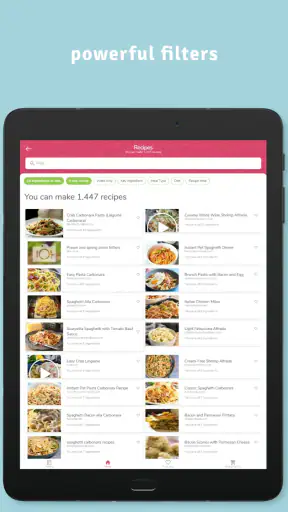
I recommend beginning with three to five substantial ingredients rather than entering an entire kitchen at once. This gives the search a clear direction while leaving room for recipes that use common supporting items. If the results are too broad, I add another ingredient. If they are too narrow, I remove a minor item and search again. That simple adjustment is more effective than assuming the first result list is final.
I also check whether an ingredient is genuinely central to the meal. Adding a small amount of something I would rather save can distort the search and encourage waste. When I am trying to clear leftovers, I mark the ingredients that need using first in my own notes or memory, then use the app to find recipes that combine them. The app supplies the possibilities; I supply the priority.
For leftovers, I look beyond the exact recipe title. A result can be useful as a framework even if I change the protein, vegetable, or seasoning. This is where the app becomes more valuable for an experienced home cook than for someone expecting rigid instructions. I can use the suggested recipe to understand the general combination, then adapt it to what is actually available.
Finally, I avoid judging the app by one unsuccessful search. A sparse or awkward ingredient list may simply be a difficult cooking problem. I get a fairer impression by trying it after a normal grocery trip and during a leftover-clearing evening. Those are the situations where its ingredient-first design has the clearest chance to save time and reduce waste.
My long-term verdict
After the initial excitement wears off, SuperCook remains worthwhile for a specific kind of cook: someone who regularly has ingredients at home but struggles to turn them into a plan. Its lasting strength is not novelty. It is the repeatable usefulness of starting with reality instead of an ideal recipe. That makes it especially good for flexible households, budget-conscious shoppers, busy workers, and anyone trying to use food before buying more.
I would not call it a complete cooking companion. It does not replace taste, planning judgement, safety checks, or a recipe source that teaches technique in depth. The ingredient list needs occasional maintenance, and the results can become less exciting when the pantry never changes. Those are genuine limitations, but they are manageable if I use the app for discovery and filtering rather than expecting it to run the entire kitchen.
The current version, 2.0.29.1, gives Android users on version 7.0 or later a low-risk way to test that approach because the app is free. I would start with a normal set of ingredients, use it for a week of real meals, and notice whether it changes my shopping or leftover habits. If it does, the small maintenance effort is justified. If I already have a reliable meal-planning system, its role may be much smaller.
My recommendation is therefore positive but targeted. SuperCook earns lasting space when it becomes part of the pantry routine, not when it is treated as a novelty recipe browser. I would keep it installed for those evenings when the fridge looks uninspiring and I want a practical answer without another shopping trip. For cooks seeking structured education, precise nutrition control, or elaborate inspiration, I would choose a more specialized alternative. For everyday ingredient-led cooking, this app solves a recurring problem cleanly enough to keep coming back to.


